
A piece of land may look like an attractive development opportunity, but its suitability for residential construction depends on much more than its size and location.
Before a site can become a successful housing development, several factors need to be assessed. Ground conditions, access, drainage, planning restrictions and the costs involved in construction can all influence what is achievable.
For landowners, investors and developers, understanding these factors early can help establish whether a site has genuine development potential.
At Mac & Burg, we combine property development knowledge with practical construction experience to assess opportunities across Hertfordshire, Bedfordshire, Buckinghamshire and the wider South East.
Understanding the Physical Characteristics of the Land
The physical characteristics of a site play an important role in determining how it could be developed.
A relatively level plot may be easier to build on than land with a significant slope, where excavation, retaining structures and changes in ground levels can add complexity and cost.
However, level ground does not automatically mean straightforward construction. Ground conditions, drainage requirements and the presence of existing structures can all affect the work needed before building begins.
The size and shape of a plot also influence what can be achieved. An irregularly shaped site may restrict building positions, access arrangements or the number of properties that can reasonably be accommodated.
These factors are particularly important when assessing land for multiple homes, where the layout must account for individual properties alongside access, parking and the wider requirements of the development.
Our experience in new build developments gives us an understanding of how the characteristics of a site can influence the construction work required to bring a residential scheme forward.
Access and Infrastructure Requirements
A site needs suitable access not only for its eventual residents but also for the construction work required to develop it.
During the building process, deliveries, construction vehicles and equipment need to reach the site. Restricted access can create practical difficulties, particularly where development land sits behind existing properties or is approached through narrow residential roads.
Access arrangements may also need to satisfy highway and planning requirements, depending on the nature of the proposed development.
Infrastructure is another important consideration. Residential developments generally require connections to essential services, including water, electricity and wastewater infrastructure. The availability, capacity and cost of these connections can affect the viability of a project.
Where existing networks are some distance from the site, additional infrastructure work may be required. Even where services are nearby, this does not necessarily mean sufficient capacity is available for the proposed number of homes.
Understanding these requirements early helps establish a more realistic picture of the work involved.
Ground Conditions and Site Preparation
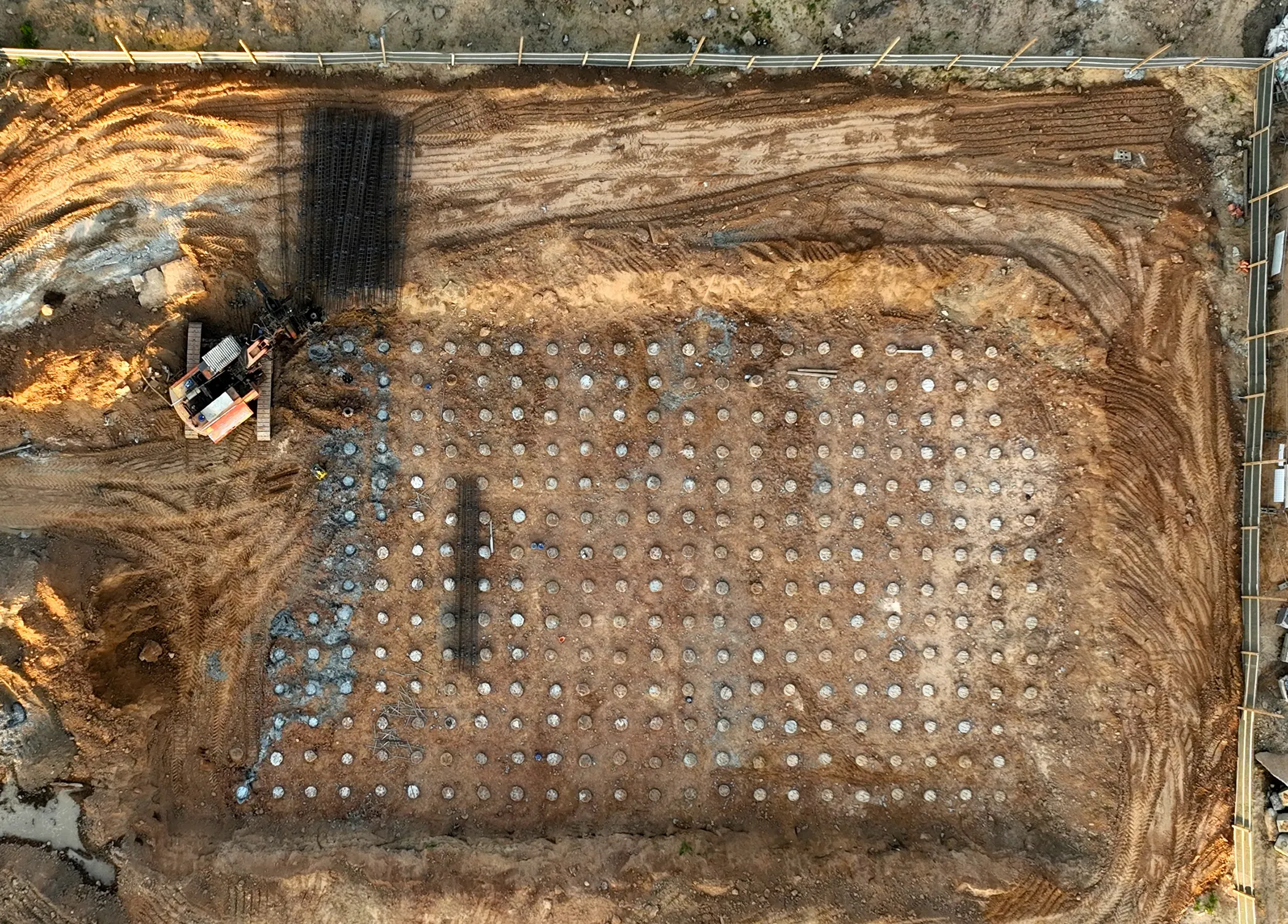
Some of the most significant construction challenges are not immediately visible when viewing a plot of land. Ground conditions can influence the type of foundations required, the extent of excavation and the preparation needed before construction begins.
Previous uses of the land may also be relevant. For example, certain former industrial or commercial sites can require investigation for potential contamination before residential development is appropriate.
Drainage and flood risk are equally important. The way surface water is managed can influence both the layout of a development and the infrastructure required to support it.
These matters may require specialist surveys, investigations or technical advice before the full implications for a proposed development can be established.
Our groundworks services form part of our wider construction capability, covering work such as site preparation, excavation, foundations and substructure construction.
For developers and landowners, understanding the relationship between ground conditions and the proposed buildings is an important part of assessing whether a site can be developed successfully.
Planning Permission and Development Potential
Planning is one of the most significant factors in determining whether land is suitable for residential development.
A site may appear physically capable of accommodating several houses, but that does not mean the local planning authority will support the proposal.
Planning decisions are influenced by a range of considerations, including local planning policies, access, neighbouring properties, environmental constraints and the character of the surrounding area.
The location of a site can also affect its prospects. Land within an established settlement may face different planning considerations from land in the countryside or Green Belt.
Does Existing Planning Permission Make a Site More Attractive?
Land with existing planning permission can be particularly interesting to developers because an important stage of the development process has already been addressed.
However, planning permission does not automatically make a site commercially viable. The approved scheme still needs to be assessed against construction costs, site conditions, infrastructure requirements and the likely value of the completed properties.
It is also important to understand the type of permission granted, any conditions attached to it and whether further approvals or obligations may be required.
Mac & Burg is actively interested in purchasing land with planning permission, including individual building plots and sites suitable for multiple homes. We also welcome opportunities involving land without planning consent where there may be clear development potential.
Assessing the Commercial Viability of a Development
A site can be physically suitable for construction and have planning permission, yet still present challenges from a financial perspective. The potential value of the completed homes needs to be assessed alongside the cost of acquiring the land, preparing the site and carrying out the development.
Construction costs can vary significantly depending on the design, specification and complexity of the proposed buildings. A development involving substantial detached houses will have different requirements from a scheme comprising several smaller properties.
The local property market also matters. The type, size and specification of homes proposed should reflect the characteristics of the area and the likely demand for the finished properties.
For this reason, the number of homes that could potentially fit onto a site is not always the most useful measure of its development value. A smaller scheme with an appropriate layout and specification may be more viable than a larger proposal that introduces significant construction costs or planning difficulties.
Mac & Burg has experience developing and investing in property across the South East. Our approach combines an understanding of development opportunities with practical knowledge of what is required to deliver the finished buildings.
Working With an Experienced Development Partner
Landowners do not always have the experience, resources or desire to take a residential development forward independently. Some may have a plot with planning permission but be unsure how to progress it. Others may own land with potential for several homes and want to explore the options available before making a decision.
Working with an experienced property developer can help establish whether an opportunity is worth pursuing and what a potential development arrangement might involve. Mac & Burg works with private landowners through property development joint ventures and partnerships, bringing development and construction experience to opportunities that may benefit from a collaborative approach.
A joint venture can provide an alternative to selling land outright, although the appropriate arrangement depends on the site and the objectives of those involved.
We are also actively looking to acquire suitable development land, with or without planning permission. Our construction capabilities include new build developments, luxury home construction and the groundworks required for substantial building projects.
With around 90% of our build kept in house, we maintain close involvement in the construction process and the quality of the properties we deliver.
Have Land With Residential Development Potential?
If you own land that could be suitable for residential development, understanding its potential is an important first step. Mac & Burg welcomes enquiries from private landowners, property owners and professional agents with sites across Hertfordshire, Bedfordshire and Buckinghamshire.
We are interested in individual building plots, land suitable for multiple homes and existing properties with redevelopment potential. Depending on the opportunity, we may be interested in acquiring the site or exploring a joint venture arrangement.
Contact Mac & Burg on 07866 592 771 to discuss your land and its potential for residential development.